What is white label Webflow development?
It’s an arrangement where a development partner builds Webflow sites that your agency delivers to clients under its own brand. The partner works behind the scenes; your client only ever sees your agency.
White label Webflow development helps agencies take on more Webflow projects without hiring another full-time developer. Learn how it works, what to outsource, what a reliable partner should deliver, and how to protect your client relationships.
Your agency just closed another website project.
The designs are approved, the client wants to move quickly, and the site needs to be built in Webflow.
There’s only one problem: your development team is already at capacity.
You could hire another Webflow developer, but recruiting takes time. You could bring in a freelancer, but finding someone reliable every time a project lands creates another problem. And if Webflow development isn’t consistently part of your workload, adding another full-time salary might not make sense.
This is where white label Webflow development becomes useful.
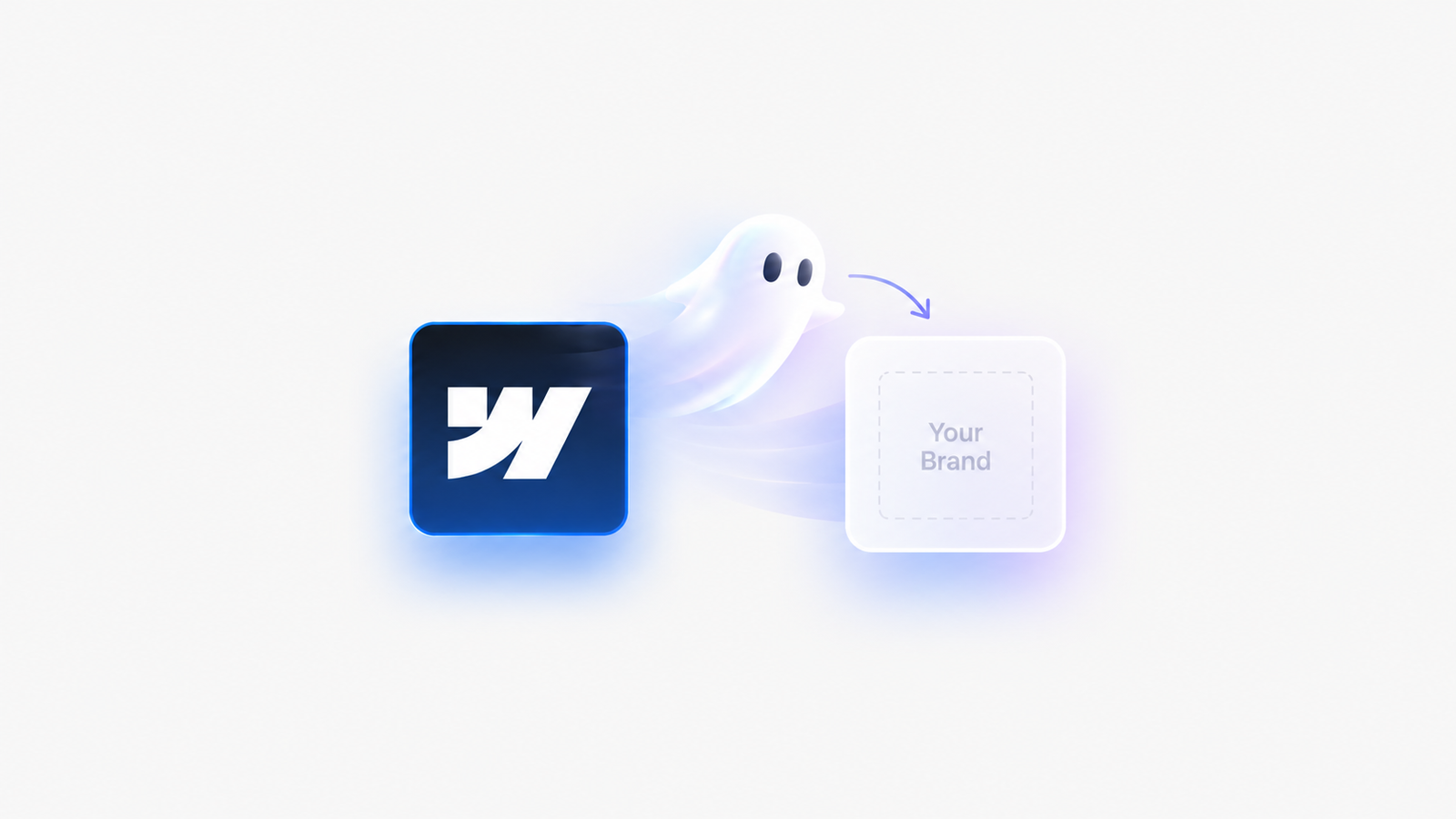
Instead of expanding your internal team, you work with a Webflow development partner who builds the website behind the scenes while your agency remains completely client-facing.
Your agency owns the relationship.
Your agency manages the project.
Your agency delivers the website.
The development partner simply becomes an invisible extension of your production team.
In this guide, we’ll look at how white label Webflow development works, what agencies can outsource, what separates a strong Webflow build from a fragile one, and what you should look for before trusting another developer with your projects.
White label Webflow development is when an external Webflow developer or development team builds websites for your agency while the work is delivered under your agency's brand.
Think of it as adding Webflow development capacity without adding another permanent employee.
Your agency can continue handling strategy, design, account management and client communication while your white label partner handles the technical implementation.
A typical project might look like this:
Your agency → Client
Strategy, design, communication and project management.
White label developer → Your agency
Webflow development, CMS architecture, responsive implementation, animations, QA and technical support.
From the client's perspective, everything is being delivered by your agency.
The development partner stays behind the scenes.
The biggest reason isn't simply reducing development costs.
It's capacity.
Agency workloads are rarely perfectly predictable.
One month you might have two websites in production. The next month you suddenly have five.
Building your permanent team around your busiest month creates unnecessary overhead. Building around your quietest month means turning down work when several projects arrive together.
White label development gives agencies another option.
Instead of asking:
"Do we have enough developers to take this project?"
You can ask:
"Do we have enough capacity internally or should we send the build to our development partner?"
That makes your development capacity much more flexible.
Hiring internally makes sense when you have enough predictable Webflow work to keep that developer busy.
But that isn't always the case.
A full-time developer comes with a permanent commitment regardless of whether your pipeline is full that month.
A white label Webflow partner works differently.
You expand production when you need it and reduce it when you don't.
This can be particularly useful for design studios, branding agencies and marketing agencies where Webflow development supports the core service but isn't necessarily the agency's primary business.
Instead of turning your agency into a development company, you can keep focusing on the things your team does best.
White label development doesn't necessarily mean handing over the entire website.
A good partner should be able to integrate into different parts of your workflow.
This is the most common arrangement.
Your designers deliver approved Figma files and the development partner turns them into a responsive Webflow website.
That can include:
Your designers remain focused on design while development happens in parallel.
Content-heavy websites often require more architecture than a simple landing page.
A white label developer can structure CMS collections for things like:
The goal isn't simply making the CMS work.
It should also remain understandable for the client's marketing team after handoff.
This is where having a development partner with front-end experience becomes particularly valuable.
Webflow's native interactions can handle many animations, but more ambitious websites often require technologies such as GSAP, JavaScript, Lottie or Rive.
That allows agencies to sell more sophisticated digital experiences without needing an animation specialist permanently on staff.
Not every Webflow project stays completely inside Webflow.
Projects may require analytics implementations, APIs, custom JavaScript, calculators, filtering systems, third-party tools or other integrations.
Working with someone who understands both Webflow and traditional front-end development gives your agency more room before having to tell a designer:
"Webflow can't do that."
Protecting your agency-client relationship
This is one of the most important parts of white label work.
If you're introducing another company or freelancer into your production process, there should be clear boundaries.
Before starting, establish who owns the work, who communicates with the client and what happens to the website when development is complete.
For many agencies, that means using an NDA and ensuring the agreement covers confidentiality and intellectual property.
Your development partner shouldn't use your client relationship as a sales opportunity.
They shouldn't unexpectedly contact the client.
And they shouldn't present themselves as the company responsible for delivering the project unless you've explicitly agreed otherwise.
The point of white label development is simple:
You gain production capacity without giving up ownership of the relationship.
White label Webflow freelancer vs white label Webflow agency
Both models can work.
A larger white label agency can provide more capacity and potentially assign multiple developers to different projects.
An independent specialist can offer a more direct relationship and greater consistency because the same person may work across your projects.
The better choice depends on what your agency actually needs.
If you're regularly outsourcing several websites simultaneously, production capacity may matter most.
If you're building fewer but highly customized sites, having a consistent senior developer who understands your design standards may be more valuable.
The important question isn't necessarily agency vs freelancer.
It's:
Can this partner repeatedly deliver the standard of work you're comfortable putting your agency's name on?
A useful development partner should also be comfortable saying this.
Webflow is excellent for many marketing websites, but it isn't automatically the best architecture for every project.
A project may eventually require more complex application logic, highly customized content infrastructure, unusual integrations or a different development architecture.
That's why front-end experience beyond Webflow can be valuable.
Instead of forcing every project into the same platform, your development partner can help identify when Webflow makes sense and when something such as Astro with a headless CMS like Sanity may be a better fit.
The technology should follow the project's requirements, not the other way around.
It’s an arrangement where a development partner builds Webflow sites that your agency delivers to clients under its own brand. The partner works behind the scenes; your client only ever sees your agency.
Often, yes. It lets a small team take on Webflow work it couldn’t otherwise staff – a real constraint when 72% of employers can’t find the skilled talent they need and tech is the hardest-hit sector at 75% (ManpowerGroup, 2026) – without the cost and lead time of hiring.
Sign an NDA with an explicit white-label anonymity clause that bars the partner from contacting your client or referencing the work, and require unbranded deliverables. Confirm the partner has delivered under those terms before.